Business partners signing a legal compliance contract in Singapore

Preparing for Year-End: Compliance Checklist for Singapore Companies

Key Takeaways:

  • Conducting a thorough year-end review helps ensure that company records, officer changes, and financial statements are accurate and complete before filing deadlines.
  • Keeping statutory registers up to date throughout the year enhances transparency and supports effective corporate governance.
  • Finalising pending resolutions and documenting decisions prevents administrative delays and compliance issues in the next financial year.
  • Working closely with a qualified corporate secretary and accountant helps streamline filings, reduce errors, and maintain your company’s good standing with regulators.

Introduction

As the financial year comes to a close, many Singapore companies take the time to review their year-end compliance. It is more than just a routine exercise; it is a valuable opportunity to ensure all filings are up to date, records are accurate, and key corporate decisions are properly documented. These steps help your business remain in good standing with ACRA and prepare for a smooth start to the new financial year.

Here is a simple and practical year-end compliance checklist of what to review before closing your company’s books for the year.

Have You Filed All Changes to the Company Officers with ACRA?

A common issue that arises during the year-end compliance process is the failure to update ACRA regarding changes in company officers. If your business has appointed new directors, changed your company secretary, or updated shareholder details, these changes must be correctly lodged through BizFile+.

Leaving such updates incomplete can lead to discrepancies in public records, which may affect your company’s transparency and compliance status. Partnering with a company secretary service in Singapore ensures that all appointments and cessations are filed promptly and accurately, helping your business stay compliant and avoid unnecessary penalties.

Are Your Statutory Registers Up to Date?

Your company’s statutory registers serve as the official record of key details, including directors, shareholders, share capital, and charges. Over the course of the year, these records can become outdated if updates are not made after resolutions, share movements, or officer changes.

As part of your year-end compliance process, it is essential to carry out a statutory registers maintenance review. This ensures that every transaction and decision, from share transfers to new appointments, is accurately documented. Keeping your registers up to date not only supports good corporate governance but also makes future filings and audits much more efficient.

Have You Completed All Pending Resolutions?

Unresolved company matters can create compliance gaps and delay your year-end compliance process. Items such as dividend declarations, share allotments, or address changes should be reviewed and formally documented before the end of the financial year.

A corporate secretary’s year-end review provides the ideal opportunity to identify and finalise these outstanding matters. Completing them on time ensures that your company’s records remain accurate and transparent, providing directors, shareholders, and auditors with a clear picture of all corporate actions taken during the year.

Have You Prepared Your Financial Statements in Advance?

Even if your company qualifies for an audit exemption, financial statements are still needed for ACRA filing preparation. Preparing these documents early allows time to review performance, make adjustments, and address any accounting queries well before submission deadlines.

Engaging an outsourced accountant can make this process more efficient. With professional support, your financial data will be reconciled appropriately and presented in accordance with the Financial Reporting Standards (FRSs). Early preparation also helps your company secretary file the annual return promptly once the accounts are ready, keeping your year-end compliance on track.

Are You Coordinating Effectively with Your Corporate Secretary?

The final stage of year-end compliance involves reviewing the entire process with your appointed corporate secretary. Close coordination helps ensure that filings, resolutions, and statutory registers are consistent and complete, minimising the risk of last-minute issues.

Partnering with a trusted provider of corporate services in Singapore gives your business structured support for ongoing compliance. With professionals managing your statutory requirements accurately and on time, you can focus on running your operations with confidence and peace of mind.

Professional presenting a year-end financial report to company directors

Conclusion

Staying compliant at year-end is more than just completing administrative tasks. It is about maintaining a strong legal and operational foundation that supports your company’s long-term stability. Timely filings, accurate records, and well-documented resolutions demonstrate professionalism and reinforce your credibility with regulators, partners, and stakeholders.

For professional guidance with incorporation, annual filings, and ongoing year-end compliance, contact Office M today. Our team provides dependable support to keep your business compliant, organised, and ready for growth in the year ahead.

Corporate secretary consulting client on compliance using tablet.

Corporate Secretary Duties and Responsibilities: What Every Singapore Business Needs to Know

Introduction

The role of a corporate secretary in Singapore carries real legal weight. It is a statutory appointment under the Companies Act, and far from a simple administrative formality. This position anchors the company’s compliance framework and keeps the organisation aligned with regulatory expectations at every stage. Many businesses, especially SMEs, turn to a corporate services provider for guidance when they do not have in-house expertise to manage these requirements.

A corporate secretary acts as the bridge between directors, shareholders, and regulators. They help structure decision-making, maintain accurate documentation, and support the smooth execution of statutory obligations. Much of their work happens quietly in the background, yet it shapes how confidently a business can operate day to day.

The scope of corporate secretary duties and responsibilities goes well beyond preparing forms or filing documents. It includes advisory support on governance practices, preparation of key resolutions, coordination of statutory filings, and ensuring the company stays on track with its compliance commitments over time.

In many organisations, especially those without internal legal or compliance teams, the duties and responsibilities of a corporate secretary become a stabilising force. Their guidance helps safeguard the company’s long-term integrity, ensures accountability, and provides directors with clarity as the business grows or regulations evolve.

Singapore’s business landscape moves quickly, and companies of all sizes benefit from reliable secretarial support. Larger organisations value the structure it provides for governance, while SMEs rely on a corporate secretary to minimise compliance risks and maintain proper oversight. With consistent support in place, businesses can focus on growth while managing statutory expectations with confidence.

Key Takeaways:

  • A corporate secretary holds a statutory position in Singapore, helping the company meet its legal and regulatory obligations under the Companies Act.
  • Strong management of filings, records, and governance processes prevents penalties, supports transparency, and keeps daily operations running smoothly.
  • Directors and shareholders depend on the corporate secretary for accurate documentation, structured decision-making, and guidance on sound governance practices.
  • The duties and responsibilities of a corporate secretary provide long-term stability. Engaging capable support, whether in-house or through a service provider, strengthens compliance and supports sustainable business growth.

The Core Areas of Corporate Secretary Duties and Responsibilities

A corporate secretary manages the essential functions that keep a company compliant, organised, and well-governed. These areas cover regulatory filings, support for directors and shareholders, and the administrative work required to keep company records accurate and up to date. Together, the duties and responsibilities of a corporate secretary help the organisation meet statutory obligations, maintain clear communication among stakeholders, and operate confidently within Singapore’s regulatory environment.

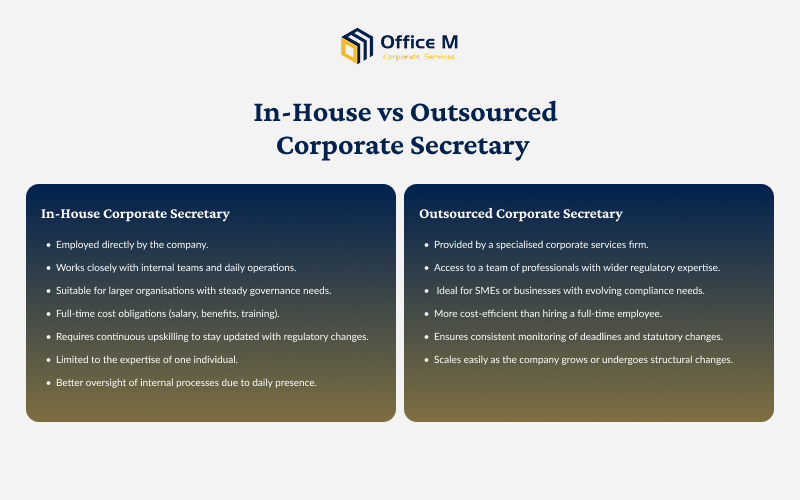
Comparison table: In-House versus Outsourced Corporate Secretary.

Ensuring Legal and Regulatory Compliance

A key part of a corporate secretary’s duties and responsibilities is keeping the company aligned with Singapore’s regulatory framework. This includes preparing and submitting statutory filings, such as annual returns, written resolutions, and other ACRA filings, within the required deadlines. Companies that engage a company secretary service often benefit from consistent oversight that reduces errors, late submissions, and avoidable penalties.

Accurate maintenance of statutory registers, company records, and meeting minutes also forms a significant part of a corporate secretary’s duties and responsibilities. These documents create a clear and traceable record of the company’s activities and may be requested by ACRA or other authorities at any time. Well-maintained records ensure the business can respond quickly and confidently when information is required.

A corporate secretary also keeps track of upcoming compliance deadlines and monitors regulatory changes that may affect the business. This proactive approach helps directors stay informed and prevents issues such as missed filings or incomplete documentation. By staying up to date on evolving laws and reporting requirements, the company can adjust its internal processes and remain fully compliant as regulations shift over time.

Supporting the Board and Shareholders

Another aspect of a corporate secretary’s duties and responsibilities is facilitating clear communication between directors, shareholders, and regulatory bodies. This includes issuing meeting notices, preparing agendas, and ensuring important decisions are accurately recorded. For newly formed companies that engage incorporation services, this early support helps establish strong governance habits from the start.

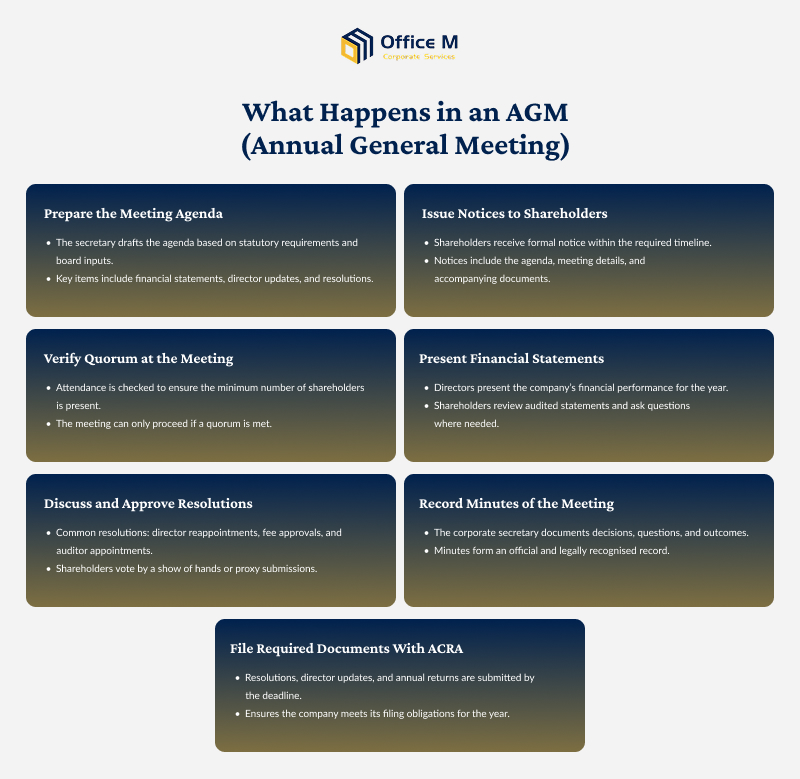
Much of a corporate secretary’s duties and responsibilities revolve around managing formal meetings. Planning and coordinating board meetings, extraordinary general meetings, and annual general meetings ensures that these sessions follow statutory timelines and procedural rules. The decisions made during these meetings must be appropriately documented for internal use and, where required, for filing with the authorities.

The corporate secretary also prepares and processes key resolutions involving share allotments, director appointments or removals, and amendments to the company constitution. These actions must meet legal standards, and directors often rely on the secretary’s governance expertise to ensure each step is carried out correctly. This structured support safeguards the integrity of board decision-making and helps maintain accountability as the company grows.

Corporate secretary writing notes during her administrative duties.

Administrative and Advisory Functions Beyond Compliance

Beyond formal compliance work, a corporate secretary manages a wide range of administrative duties that keep the company’s structure, records, and official information up to date. This includes issuing share certificates, maintaining the register of members, and ensuring that any changes to the company’s particulars are filed promptly with ACRA. These tasks are an integral part of a corporate secretary’s duties and responsibilities, helping the organisation maintain a clear and accurate record of its activities.

Corporate secretaries also provide practical advisory support. Their guidance helps directors address governance matters, including managing conflicts of interest, assigning responsibilities, and adopting internal policies that align with legal requirements. This blend of administrative and advisory work allows the board to navigate day-to-day decisions with confidence, drawing on the secretary’s understanding of regulatory expectations and good governance practices in Singapore.

Administrative oversight extends to structural updates such as changes in shareholding, amendments to the company constitution, or adjustments to the board. Each of these actions requires careful documentation and correctly submitted filings to ensure compliance. For smaller companies or those working from flexible setups, the secretary may also coordinate with services like virtual office rental to keep official records tidy and consistent across all touchpoints.

In many organisations, the duties and responsibilities of a corporate secretary form the backbone of ongoing processes. Their involvement ensures that administrative changes are documented accurately, that governance guidelines are followed, and that the company remains well-positioned to meet both regulatory expectations and internal needs as it grows.

Flowchart of a Corporate Secretary's Annual General Meeting duties.

Why These Duties Matter for Businesses

The work of a corporate secretary directly influences how smoothly a company operates. Their role goes beyond meeting statutory requirements. It supports clearer governance, stronger communication among stakeholders, and more confident long-term planning. By managing filings, maintaining accurate records, and guiding directors on proper procedures, the secretary helps the organisation minimise risks and stay aligned with Singapore’s regulatory expectations.

These functions become even more critical as the business expands, takes on new investors, or navigates more complex decisions. The duties and responsibilities of a corporate secretary provide the structure and assurance needed for a company to grow steadily without overlooking crucial compliance or governance steps.

Ensuring Smooth and Compliant Operations

Staying compliant with statutory requirements is essential for any business operating in Singapore. When a corporate secretary manages filings, maintains statutory registers, and keeps documents accurate, the company avoids issues such as late penalties, incomplete submissions, or discrepancies in official records. These tasks may seem administrative, but they form the foundation of dependable operations. A well-organised compliance framework also reduces internal friction, giving directors and managers access to current information instead of spending time resolving documentation gaps.

The duties and responsibilities of a corporate secretary are crucial to strengthening the company’s readiness during moments that require quick action. Whether the business is undergoing an audit, applying for financing, or responding to a regulatory inquiry, clear and complete records help the company act confidently and efficiently.

Over time, consistent compliance builds external trust. Investors, banks, and partners regularly conduct due diligence before committing to any business, and companies with well-maintained statutory records signal accountability and stability. These impressions can directly influence opportunities for funding, partnerships, and long-term growth. By fulfilling key corporate secretary duties and responsibilities, the secretary helps the organisation maintain a strong reputation and operate smoothly in Singapore’s regulatory landscape.

Supporting Strategic Growth and Governance

As a business grows, its governance needs become more layered and complex. A corporate secretary plays an essential role in helping the organisation establish structured, transparent decision-making processes. They ensure directors are aware of procedural rules, that resolutions are drafted with accuracy, and that key decisions are properly documented to meet both legal and governance standards. This reduces the risk of misunderstandings, disputes, or procedural errors as responsibilities expand.

The duties and responsibilities of a corporate secretary become even more significant during major corporate milestones, such as fundraising, mergers and acquisitions, restructuring, or the application for new licences. Stakeholders want assurance that decisions are made responsibly and that the company’s records clearly reflect these actions. For businesses with multiple shareholders or overseas investors, the secretary often serves as a neutral point of communication, ensuring that updates are shared accurately and in a timely manner.

By supporting directors with well-structured processes and reliable documentation, the corporate secretary helps reinforce strong governance practices. This contributes to the organisation’s credibility and creates a stable foundation for long-term growth. When the company begins to scale or explore new investment and partnership opportunities, the structure and oversight created through strong corporate secretary duties and responsibilities give stakeholders confidence in the organisation’s governance and decision-making.

Corporate secretary providing client support with a headset.

Questions You Might Have

1. Is it mandatory for every company in Singapore to appoint a corporate secretary?

Yes. Every company must appoint a corporate secretary within six months of incorporation, and the role cannot remain vacant beyond that point. The secretary must be a local resident who can perform key statutory functions, including handling filings, maintaining registers, and advising the company on compliance requirements. This ensures that the duties and responsibilities of a corporate secretary are fulfilled from the very beginning of the company’s operations.

2. Can a director also act as the corporate secretary?

A sole director cannot serve as both director and corporate secretary at the same time. In companies with more than one director, a director may take on the role if they have the necessary knowledge and experience. Still, many businesses choose to appoint a separate secretary to keep compliance tasks objective and prevent overloading the board.

3. What qualifications are required to act as a corporate secretary?

A corporate secretary must have enough expertise to manage statutory responsibilities confidently. For public companies, ACRA requires the secretary to be a registered filing agent or a qualified professional such as a lawyer, accountant, or someone with recognised corporate secretarial experience. Private companies have more flexibility, but the secretary must still understand company law, governance processes, and the practical corporate secretary duties and responsibilities expected in Singapore.

4. What is the difference between appointing an in-house corporate secretary and engaging a corporate service provider?

An in-house corporate secretary is employed directly by the company and focuses solely on internal governance and compliance needs. An outsourced corporate service provider offers access to a team of specialists who manage secretarial functions on the company’s behalf.

Many SMEs prefer outsourced support because it provides professional expertise, consistent compliance monitoring, and cost efficiency without the need for a full-time hire. This can be especially helpful for growing businesses with evolving governance and regulatory needs.

Corporate secretary preparing company documents and board meeting minutes.

Conclusion

A corporate secretary plays a central role in keeping a company compliant, organised, and well-governed. Beyond handling routine paperwork, they help ensure that statutory obligations are met, records remain accurate, and key decisions are documented in ways that satisfy regulatory standards. With this foundation in place, directors and shareholders can focus on running the business, knowing that core governance processes are being managed with care.

The duties and responsibilities of a corporate secretary become even more important as a business grows. Expansion often brings new structures, additional stakeholders, and more complex reporting needs. A capable secretary helps the organisation navigate these changes smoothly by reducing compliance risks, preparing proper documentation, and keeping the company aligned with Singapore’s regulatory expectations. For many SMEs, this steady support offers reassurance, especially when internal resources are limited.

When these corporate secretary duties and responsibilities are carried out consistently, the company benefits from more transparent governance, organised records, and a smoother compliance journey as it grows.

Office M provides corporate secretarial, compliance, and governance services tailored to the needs of Singapore businesses at different stages of growth. Our team helps companies meet statutory requirements, maintain clear records, and build governance practices that strengthen over time.

If you are looking to enhance your compliance framework or streamline governance processes, reach out to Office M to learn how our services can help your company advance with confidence.


A corporate manager working on a computer

Growing Pains: How to Scale Your Corporate Compliance as Your Business Expands

Key Takeaways:

  • Business growth introduces new legal and reporting responsibilities that require closer attention to record-keeping and statutory timelines.
  • As operations expand, updating company records and board resolutions ensures accuracy, transparency, and accountability.
  • Once a company exceeds specific financial or staffing limits, formal audits become mandatory, making preparation essential.
  • Engaging professional support enables growing businesses to maintain compliance efficiently, allowing them to focus on long-term strategy and performance.

What Business Expansion Means for Your Corporate Compliance

Growth is a rewarding milestone for any business, marking progress, opportunity, and greater reach. Yet, with expansion comes added responsibility. Processes that once suited a small team may no longer be enough as operations, revenue, and staffing increase. From new reporting obligations to changing audit requirements, scaling up often calls for a closer look at how your organisation manages corporate compliance.

In Singapore’s structured regulatory landscape, compliance is more than a formality. It plays a vital role in maintaining credibility and ensuring smooth operations. As businesses evolve, their obligations to ACRA and IRAS also change.

This article highlights the main compliance areas that shift with growth and explains how professional support can help SMEs establish governance systems that scale confidently and sustainably.

What Happens to Filing and Reporting Obligations as a Company Grows?

As your company expands, annual filing requirements with ACRA and IRAS often become more detailed and complex. Beyond the basics, larger operations may need to register for GST once your annual turnover exceeds S$1 million, or submit Estimated Chargeable Income (ECI) within three months of the financial year-end.

These responsibilities can quickly increase in number and complexity as your business scales. Staying on top of statutory deadlines helps you avoid penalties and maintain good standing with regulators. Engaging a professional corporate advisory firm in Singapore can make this process smoother by managing submissions accurately and ensuring compliance, allowing your team to focus on growth and day-to-day operations with confidence.

Why Do Board Resolutions and Corporate Records Need Regular Updates?

As an organisation grows, its structure and operations often become more dynamic. New shareholders, additional directors, or expanded business activities introduce changes that must be properly documented and approved by the board. Keeping corporate records accurate and up to date is not only good governance but also a legal obligation under Singapore’s Companies Act.

Regular updates to director appointments, share allotments, and business activity details help maintain transparency and accountability within the company. A qualified company secretary in Singapore plays a key role in ensuring these records are filed correctly and that all statutory registers remain compliant with ACRA’s requirements.

When Does Audit Exemption No Longer Apply?

Many smaller private companies in Singapore qualify for audit exemption, which helps reduce administrative workload and costs. However, this exemption ceases once a business crosses the audit exemption threshold of S$10 million in annual revenue, S$10 million in total assets, or 50 employees.

Exceeding any two of these limits means your company must prepare audited financial statements each year. Planning early for this transition allows sufficient time to organise records and ensure readiness for external review. Working with an experienced tax consultant in Singapore can help maintain accuracy in your accounts and filings while keeping them fully aligned with financial reporting and compliance standards as your company grows.

Why Does Growth Increase the Risk of Regulatory Scrutiny?

As a company grows, it naturally attracts more attention from regulators, investors, and business partners. With this increased visibility comes a higher expectation of transparency and accountability. Issues that might have gone unnoticed in a smaller business can carry far greater consequences for a larger organisation, including reputational harm or financial penalties.

Strong corporate compliance and governance practices become essential as your operations expand. Maintaining consistent, well-documented procedures helps protect your company’s reputation and reinforces confidence among stakeholders, clients, and partners who value reliability and integrity in business relationships.

How Can Outsourcing Help Build Scalable Governance for SMEs?

As businesses grow, managing compliance internally can become increasingly demanding. Expanding reporting, filing, and documentation requirements often place additional strain on in-house teams. Outsourcing corporate secretarial and accounting functions enables companies to access professional expertise, ensuring that all regulatory requirements are handled efficiently and accurately.

By partnering with a trusted corporate services provider in Singapore, SMEs can receive structured support across incorporation, accounting, taxation, and secretarial matters. This not only keeps the company compliant but also frees internal teams to focus on strategy, innovation, and daily operations. Over time, outsourcing helps build a strong foundation for scalable governance for SMEs, allowing compliance processes to evolve naturally alongside business growth.

A female executive reviewing documents at her desk.

Building Long-Term Confidence Through Corporate Compliance

Scaling a business involves more than expanding operations or hiring new staff. It also means growing responsibly within Singapore’s regulatory framework. As compliance requirements become increasingly complex, accuracy and timeliness are crucial for maintaining stability, credibility, and sustainable growth.

Office M offers structured support to help SMEs manage their corporate compliance with confidence. Our team provides end-to-end assistance across company secretarial, accounting, and taxation needs, ensuring your business remains compliant at every stage.

Contact us today to discover how professional guidance can strengthen your compliance foundation and support your company’s long-term growth and success.

An office lady is doing admin work with her laptop

Staying Compliant with ACRA: Key Risk Areas and How to Avoid Red Flags

Key Takeaways:

  • Timely and accurate filing is essential to avoid financial penalties and maintain a company’s good standing with regulatory authorities.
  • Transparency in updating directorship and shareholding details helps preserve trust and ensures that corporate records remain accurate and consistent.
  • Even dormant companies must meet certain statutory obligations unless they are formally exempted or struck off.
  • A qualified corporate secretary provides ongoing oversight, helping businesses prevent compliance oversights and strengthen governance practices.

Introduction

For companies in Singapore, meeting ACRA compliance requirements is not just an administrative duty. It reflects a company’s commitment to transparency and accountability. ACRA (the Accounting and Corporate Regulatory Authority) sets out a clear framework of statutory requirements to help businesses uphold strong corporate governance and maintain trust with the public.

When filings are delayed or records are incomplete, companies may face penalties or enforcement action. Understanding where compliance lapses often occur helps businesses address potential risks early, stay organised, and preserve credibility with both regulators and stakeholders.

Why Are Late Annual Returns One of the Most Common ACRA Filing Breaches?

Late or missed annual returns are among the most frequent ACRA compliance breaches faced by companies in Singapore. Every business is required to file its annual return within the specified deadline following its financial year-end. Delays can lead to escalating late filing fees, while repeated non-compliance may result in director disqualification or, in serious cases, prosecution.

Filing on time reflects a company’s professionalism and commitment to good governance. Engaging a qualified company secretary helps ensure that deadlines are met, documents are prepared accurately, and submissions are made promptly, thereby maintaining your company’s good standing with ACRA.

Why Must Changes to Directors or Shareholders Be Reported Promptly?

Transparency forms the foundation of sound corporate governance requirements in Singapore. Any change in a company’s directors, shareholders, or registered details must be reported to ACRA within the required timeframe to ensure accurate and up-to-date records.

Failing to address these updates can lead to inconsistencies in statutory records and erode trust with regulators, partners, and clients. Engaging a reliable corporate secretary provider in Singapore helps ensure that every amendment is properly recorded and filed, keeping your company’s information clear, current, and compliant.

Do Dormant Companies Still Need to Meet Filing Obligations?

Even if a company is not actively trading, it is still required to meet certain ACRA compliance obligations unless it has been formally struck off or granted an exemption under ACRA’s guidelines. Many dormant companies overlook this, mistakenly assuming that inactivity means no action is required.

To remain compliant, directors should ensure that dormant entities continue to file their annual returns or submit a proper strike-off application where applicable. Partnering with a reliable corporate services company can help monitor these requirements and ensure the necessary administrative steps are taken to close or maintain a dormant company correctly.

Why Does Recording Resolutions Matter for Corporate Governance?

Every major company decision, such as share allotments, officer appointments, or changes to the constitution, must be documented through a formal board or shareholder resolution. These resolutions form part of the company’s statutory registers, which serve as official records of the company’s corporate activities.

Failing to maintain these records breaches statutory record-keeping requirements and can weaken overall governance standards. Accurate and well-maintained registers demonstrate transparency, accountability, and commitment to ACRA compliance.

A qualified corporate secretary can help draft, record, and file resolutions correctly, ensuring your governance framework remains consistent, traceable, and compliant.

How Can a Corporate Secretary Help Prevent ACRA Compliance Issues?

A dedicated corporate secretary plays a vital role in helping your business stay compliant throughout the year. Their responsibilities extend beyond paperwork; they oversee filing deadlines, maintain statutory records, and ensure that all reporting obligations are fulfilled properly.

By engaging corporate services, business owners can focus on daily operations while professionals manage filings, registers, and annual submissions. This proactive approach helps minimise the risk of statutory filing penalties and supports a strong, well-organised corporate governance framework.

A diverse team of business professionals holding a formal meeting in a boardroom

Conclusion

Maintaining ACRA compliance is an ongoing responsibility that safeguards your company’s credibility and legal standing. Missed filings, delayed updates, or incomplete records can lead to penalties and unnecessary complications, but these risks can be effectively managed with the right support.

Partnering with an experienced corporate service provider ensures that your filings, resolutions, and statutory registers are handled accurately and in a timely manner.

For professional guidance on incorporation, annual filings, and ongoing compliance, contact Office M today. Our team provides dependable support that helps your business stay compliant, transparent, and ready for long-term growth.

Office professionals reviewing financial data on a laptop with documents spread across a desk.

What to Expect from an Annual Financial Report (Even If You’re Not Audited)

Key Takeaways:

  • Preparing financial reports on time helps businesses stay compliant and maintain transparency, even when an audit is not required.
  • Clear and accurate financial statements provide valuable insights into profitability, cash flow, and overall performance.
  • Reviewing these reports regularly enables better decision-making, cost control, and long-term planning.
  • Well-prepared reports also support regulatory filings, tax submissions, and external reviews from banks or investors.

Introduction

Even if your company qualifies for audit exemption, preparing an annual financial report remains a legal requirement in Singapore. More than just a compliance exercise, it offers a clear picture of your company’s financial health, showing how your business has performed, grown, and managed its resources over the past year.

These reports also help business owners make informed decisions, plan for the future, and maintain accountability to shareholders and regulators. Understanding what goes into them and how they support overall compliance helps your company stay organised, transparent, and ready for growth.

What Does an Annual Financial Report Include?

An annual financial report provides a summary of your company’s financial position over the financial year. It typically includes the following key components:

  • Balance Sheet (Statement of Financial Position): Outlines the company’s assets, liabilities, and equity at the end of the financial year.
  • Income Statement (Profit and Loss Statement): Shows how much the business earned and spent, highlighting its profitability.
  • Statement of Changes in Equity: Tracks movements in shareholders’ equity during the year, including retained earnings and any issued or repurchased shares.
  • Cash Flow Statement: Details how cash moves in and out of the business, offering insight into liquidity and operational efficiency.

Together, these statements provide a comprehensive view of the company’s financial health and performance. Even smaller businesses can use them to spot trends, manage costs more effectively, and make informed decisions for future growth.

Do Unaudited Reports Still Have to Follow ACRA’s Standards?

Even if your company qualifies for audit exemption, unaudited financial statements must still comply with the Singapore Financial Reporting Standards (SFRS) and the annual financial report requirements set by ACRA.

This involves preparing statements in the correct format, maintaining consistent figures, and including accurate notes and accounting policies. Meeting these standards ensures that your ACRA financial statement submission is accurate, complete, and compliant with the relevant regulations.

Many companies opt to engage professional accounting services in Singapore to handle these technical details, thereby helping to prevent delays, discrepancies, and follow-up queries from the authorities.

How Can Financial Statements Guide Business Decisions?

A well-prepared financial report is more than a compliance requirement. It provides valuable insights into how effectively your company is operating.

By analysing revenue trends, expense ratios, and cash flow performance, business owners can identify areas of strength and spot opportunities for improvement. For instance, monitoring cost control or loan repayments can highlight ways to optimise spending or allocate resources more efficiently.

Many companies also engage a corporate services provider in Singapore to interpret these findings and align financial data with business objectives, turning compliance reports into practical tools for better decision-making and long-term planning.

Why Are Financial Statements Important for Tax and Corporate Filings?

Your annual financial report plays an essential role in both tax and regulatory submissions. The figures recorded in these statements form the foundation for preparing your Estimated Chargeable Income (ECI) and corporate income tax return.

These same documents are also required when submitting annual returns to ACRA to maintain your company’s compliance status. Well-prepared reports make tax filing more straightforward and help ensure that all figures align across submissions. Many businesses rely on corporate tax filing services to manage this process efficiently and reduce the likelihood of discrepancies.

Who Else Might Request to See Your Financial Report?

Even if your report is unaudited, external parties, such as banks, investors, and business partners, may still request to review it. Lenders, for example, often examine unaudited financial statements to assess a company’s financial health before approving loans or credit facilities.

Grant providers and potential investors also use these reports to gauge business stability, performance, and reliability. Maintaining accurate and transparent records demonstrates accountability and builds the kind of trust that supports long-term partnerships and business growth.

Business professionals discussing a printed financial report with charts during a meeting.

Conclusion

Preparing an annual financial report involves more than just fulfilling statutory requirements. It provides a clear record of your company’s financial progress and ensures continued compliance with tax and regulatory standards. Even if your business qualifies for audit exemption, maintaining accurate and timely reports is essential for upholding transparency and credibility with stakeholders.

For reliable support with incorporation, financial reporting, and year-end compliance, contact Office M today. Our team provides professional guidance to help your business remain compliant, well-organised, and ready for sustainable growth.

Hand passing a document across a desk during a business exchange.

Incorporated vs Registered: What’s the Difference for Your Business in Singapore?

Key Takeaways:

  • Understanding the legal distinction between registration and incorporation helps business owners to select the most suitable structure for their specific needs and risk tolerance.
  • All businesses in Singapore must be registered with ACRA, but only incorporated entities are recognised as separate legal persons with limited liability.
  • Sole proprietorships and partnerships are easier to set up, but leave owners personally liable for debts and obligations.
  • Incorporation provides stronger credibility, greater protection, and better prospects for long-term growth; however, it also comes with additional compliance responsibilities.

Introduction

Starting a business in Singapore comes with important decisions, including how your company will be recognised under the law. Terms like “incorporated” and “registered” are often used interchangeably, but they describe two distinct forms of legal entity formation.

Understanding the difference between incorporated and registered businesses helps you determine your level of liability, compliance requirements, and long-term credibility. This article explains the meaning of each term under Singapore law and provides guidance on determining which structure best supports your business goals.

Do All Businesses in Singapore Need to Be Registered?

Every business in Singapore must be registered with the Accounting and Corporate Regulatory Authority (ACRA) to operate legally and in accordance with the law. Registration provides official recognition and applies to all business structures in Singapore, including sole proprietorships, partnerships, and companies.

Incorporation, however, goes a step further. It involves creating a separate legal entity, such as a limited liability company, that exists independently from its owners. This distinction lies at the heart of the difference between incorporated and registered businesses, as incorporation changes how liability and ownership are defined.

If you are unsure which option best suits your business goals, engaging professional company incorporation services can help you make an informed decision and ensure that all filings comply with ACRA’s requirements.

What Does It Mean When a Business Is Incorporated?

When a business is incorporated, it becomes a separate legal entity with its own rights and obligations. This distinction is central to understanding the difference between incorporation and registration.

An incorporated company can enter into contracts, own property, and be held accountable in its own name. Its shareholders enjoy limited liability, which means their personal assets are generally protected if the company incurs debts or faces legal claims. This clear separation between business and personal finances gives owners greater confidence and flexibility to grow.

For entrepreneurs who value credibility, legal protection, and long-term stability, incorporation provides a more robust foundation than a standard ACRA business registration.

What Happens When a Business Is Registered but Not Incorporated?

A registered business, such as a sole proprietorship or partnership, is not legally distinct from its owner or partners. All profits, losses, and liabilities are directly linked to the individuals who own and operate the business.

Registration is typically quicker and involves fewer formalities, but it does not offer limited liability protection. Owners remain personally responsible for debts, contracts, and any legal obligations arising from the business.

As operations expand, many entrepreneurs decide to incorporate to safeguard their personal assets and build a more credible business presence. At that stage, securing a professional office address rental in Singapore can further enhance compliance and present a polished image to clients and partners.

Why Do Incorporated Companies Have More Compliance Obligations?

While incorporation offers clear legal and financial advantages, it also comes with greater accountability. Incorporated companies are required to meet ongoing compliance obligations such as filing annual returns, maintaining accurate accounting records, and preparing financial statements in line with ACRA’s standards.

Additionally, every company must appoint a qualified company secretary within six months of its incorporation. Engaging a reliable company secretary service in Singapore ensures that statutory registers, board resolutions, and filings are properly managed. This professional oversight supports sound corporate governance and helps reduce the risk of non-compliance or penalties.

How Does Incorporation Strengthen Credibility and Growth Potential?

Incorporated companies are generally viewed as more credible and professionally managed within the business community. Clients, investors, and financial institutions often perceive them as stable entities with stronger governance and long-term commitment.

This reputation can create valuable opportunities for funding, partnerships, and larger contracts. Incorporation also signals that your business is built for growth and expansion, which can set you apart in Singapore’s competitive market.

By understanding the difference between incorporated and registered businesses, you can make confident decisions that support sustainable growth and future success.

Two people shaking hands across a desk in a professional office setting.

Conclusion

Both registration and incorporation play key roles in establishing a business in Singapore. Registration provides official recognition, while incorporation creates a distinct legal entity with limited liability and greater potential for long-term growth and stability. Knowing the difference between incorporated and registered businesses enables you to select the structure that best aligns with your objectives and responsibilities.

If you are planning to start or restructure your company, partnering with experienced professionals can make the process smoother and more compliant. Contact Office M today for dependable guidance on incorporation, compliance, and corporate governance that keeps your business on a strong and sustainable path.