
Corporate Secretary Duties and Responsibilities: What Every Singapore Business Needs to Know


Introduction
The role of a corporate secretary in Singapore carries real legal weight. It is a statutory appointment under the Companies Act, and far from a simple administrative formality. This position anchors the company’s compliance framework and keeps the organisation aligned with regulatory expectations at every stage. Many businesses, especially SMEs, turn to a corporate services provider for guidance when they do not have in-house expertise to manage these requirements.
A corporate secretary acts as the bridge between directors, shareholders, and regulators. They help structure decision-making, maintain accurate documentation, and support the smooth execution of statutory obligations. Much of their work happens quietly in the background, yet it shapes how confidently a business can operate day to day.
The scope of corporate secretary duties and responsibilities goes well beyond preparing forms or filing documents. It includes advisory support on governance practices, preparation of key resolutions, coordination of statutory filings, and ensuring the company stays on track with its compliance commitments over time.
In many organisations, especially those without internal legal or compliance teams, the duties and responsibilities of a corporate secretary become a stabilising force. Their guidance helps safeguard the company’s long-term integrity, ensures accountability, and provides directors with clarity as the business grows or regulations evolve.
Singapore’s business landscape moves quickly, and companies of all sizes benefit from reliable secretarial support. Larger organisations value the structure it provides for governance, while SMEs rely on a corporate secretary to minimise compliance risks and maintain proper oversight. With consistent support in place, businesses can focus on growth while managing statutory expectations with confidence.
Key Takeaways:
- A corporate secretary holds a statutory position in Singapore, helping the company meet its legal and regulatory obligations under the Companies Act.
- Strong management of filings, records, and governance processes prevents penalties, supports transparency, and keeps daily operations running smoothly.
- Directors and shareholders depend on the corporate secretary for accurate documentation, structured decision-making, and guidance on sound governance practices.
- The duties and responsibilities of a corporate secretary provide long-term stability. Engaging capable support, whether in-house or through a service provider, strengthens compliance and supports sustainable business growth.
The Core Areas of Corporate Secretary Duties and Responsibilities
A corporate secretary manages the essential functions that keep a company compliant, organised, and well-governed. These areas cover regulatory filings, support for directors and shareholders, and the administrative work required to keep company records accurate and up to date. Together, the duties and responsibilities of a corporate secretary help the organisation meet statutory obligations, maintain clear communication among stakeholders, and operate confidently within Singapore’s regulatory environment.
Ensuring Legal and Regulatory Compliance
A key part of a corporate secretary’s duties and responsibilities is keeping the company aligned with Singapore’s regulatory framework. This includes preparing and submitting statutory filings, such as annual returns, written resolutions, and other ACRA filings, within the required deadlines. Companies that engage a company secretary service often benefit from consistent oversight that reduces errors, late submissions, and avoidable penalties.
Accurate maintenance of statutory registers, company records, and meeting minutes also forms a significant part of a corporate secretary’s duties and responsibilities. These documents create a clear and traceable record of the company’s activities and may be requested by ACRA or other authorities at any time. Well-maintained records ensure the business can respond quickly and confidently when information is required.
A corporate secretary also keeps track of upcoming compliance deadlines and monitors regulatory changes that may affect the business. This proactive approach helps directors stay informed and prevents issues such as missed filings or incomplete documentation. By staying up to date on evolving laws and reporting requirements, the company can adjust its internal processes and remain fully compliant as regulations shift over time.
Supporting the Board and Shareholders
Another aspect of a corporate secretary’s duties and responsibilities is facilitating clear communication between directors, shareholders, and regulatory bodies. This includes issuing meeting notices, preparing agendas, and ensuring important decisions are accurately recorded. For newly formed companies that engage incorporation services, this early support helps establish strong governance habits from the start.
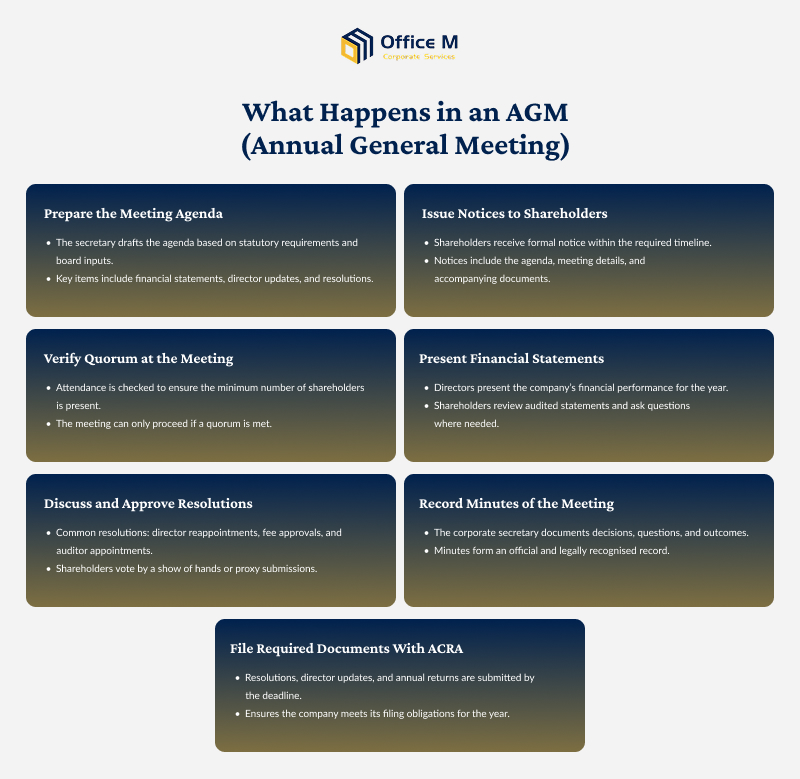
Much of a corporate secretary’s duties and responsibilities revolve around managing formal meetings. Planning and coordinating board meetings, extraordinary general meetings, and annual general meetings ensures that these sessions follow statutory timelines and procedural rules. The decisions made during these meetings must be appropriately documented for internal use and, where required, for filing with the authorities.
The corporate secretary also prepares and processes key resolutions involving share allotments, director appointments or removals, and amendments to the company constitution. These actions must meet legal standards, and directors often rely on the secretary’s governance expertise to ensure each step is carried out correctly. This structured support safeguards the integrity of board decision-making and helps maintain accountability as the company grows.

Administrative and Advisory Functions Beyond Compliance
Beyond formal compliance work, a corporate secretary manages a wide range of administrative duties that keep the company’s structure, records, and official information up to date. This includes issuing share certificates, maintaining the register of members, and ensuring that any changes to the company’s particulars are filed promptly with ACRA. These tasks are an integral part of a corporate secretary’s duties and responsibilities, helping the organisation maintain a clear and accurate record of its activities.
Corporate secretaries also provide practical advisory support. Their guidance helps directors address governance matters, including managing conflicts of interest, assigning responsibilities, and adopting internal policies that align with legal requirements. This blend of administrative and advisory work allows the board to navigate day-to-day decisions with confidence, drawing on the secretary’s understanding of regulatory expectations and good governance practices in Singapore.
Administrative oversight extends to structural updates such as changes in shareholding, amendments to the company constitution, or adjustments to the board. Each of these actions requires careful documentation and correctly submitted filings to ensure compliance. For smaller companies or those working from flexible setups, the secretary may also coordinate with services like virtual office rental to keep official records tidy and consistent across all touchpoints.
In many organisations, the duties and responsibilities of a corporate secretary form the backbone of ongoing processes. Their involvement ensures that administrative changes are documented accurately, that governance guidelines are followed, and that the company remains well-positioned to meet both regulatory expectations and internal needs as it grows.
Why These Duties Matter for Businesses
The work of a corporate secretary directly influences how smoothly a company operates. Their role goes beyond meeting statutory requirements. It supports clearer governance, stronger communication among stakeholders, and more confident long-term planning. By managing filings, maintaining accurate records, and guiding directors on proper procedures, the secretary helps the organisation minimise risks and stay aligned with Singapore’s regulatory expectations.
These functions become even more critical as the business expands, takes on new investors, or navigates more complex decisions. The duties and responsibilities of a corporate secretary provide the structure and assurance needed for a company to grow steadily without overlooking crucial compliance or governance steps.
Ensuring Smooth and Compliant Operations
Staying compliant with statutory requirements is essential for any business operating in Singapore. When a corporate secretary manages filings, maintains statutory registers, and keeps documents accurate, the company avoids issues such as late penalties, incomplete submissions, or discrepancies in official records. These tasks may seem administrative, but they form the foundation of dependable operations. A well-organised compliance framework also reduces internal friction, giving directors and managers access to current information instead of spending time resolving documentation gaps.
The duties and responsibilities of a corporate secretary are crucial to strengthening the company’s readiness during moments that require quick action. Whether the business is undergoing an audit, applying for financing, or responding to a regulatory inquiry, clear and complete records help the company act confidently and efficiently.
Over time, consistent compliance builds external trust. Investors, banks, and partners regularly conduct due diligence before committing to any business, and companies with well-maintained statutory records signal accountability and stability. These impressions can directly influence opportunities for funding, partnerships, and long-term growth. By fulfilling key corporate secretary duties and responsibilities, the secretary helps the organisation maintain a strong reputation and operate smoothly in Singapore’s regulatory landscape.
Supporting Strategic Growth and Governance
As a business grows, its governance needs become more layered and complex. A corporate secretary plays an essential role in helping the organisation establish structured, transparent decision-making processes. They ensure directors are aware of procedural rules, that resolutions are drafted with accuracy, and that key decisions are properly documented to meet both legal and governance standards. This reduces the risk of misunderstandings, disputes, or procedural errors as responsibilities expand.
The duties and responsibilities of a corporate secretary become even more significant during major corporate milestones, such as fundraising, mergers and acquisitions, restructuring, or the application for new licences. Stakeholders want assurance that decisions are made responsibly and that the company’s records clearly reflect these actions. For businesses with multiple shareholders or overseas investors, the secretary often serves as a neutral point of communication, ensuring that updates are shared accurately and in a timely manner.
By supporting directors with well-structured processes and reliable documentation, the corporate secretary helps reinforce strong governance practices. This contributes to the organisation’s credibility and creates a stable foundation for long-term growth. When the company begins to scale or explore new investment and partnership opportunities, the structure and oversight created through strong corporate secretary duties and responsibilities give stakeholders confidence in the organisation’s governance and decision-making.

Questions You Might Have
1. Is it mandatory for every company in Singapore to appoint a corporate secretary?
Yes. Every company must appoint a corporate secretary within six months of incorporation, and the role cannot remain vacant beyond that point. The secretary must be a local resident who can perform key statutory functions, including handling filings, maintaining registers, and advising the company on compliance requirements. This ensures that the duties and responsibilities of a corporate secretary are fulfilled from the very beginning of the company’s operations.
2. Can a director also act as the corporate secretary?
A sole director cannot serve as both director and corporate secretary at the same time. In companies with more than one director, a director may take on the role if they have the necessary knowledge and experience. Still, many businesses choose to appoint a separate secretary to keep compliance tasks objective and prevent overloading the board.
3. What qualifications are required to act as a corporate secretary?
A corporate secretary must have enough expertise to manage statutory responsibilities confidently. For public companies, ACRA requires the secretary to be a registered filing agent or a qualified professional such as a lawyer, accountant, or someone with recognised corporate secretarial experience. Private companies have more flexibility, but the secretary must still understand company law, governance processes, and the practical corporate secretary duties and responsibilities expected in Singapore.
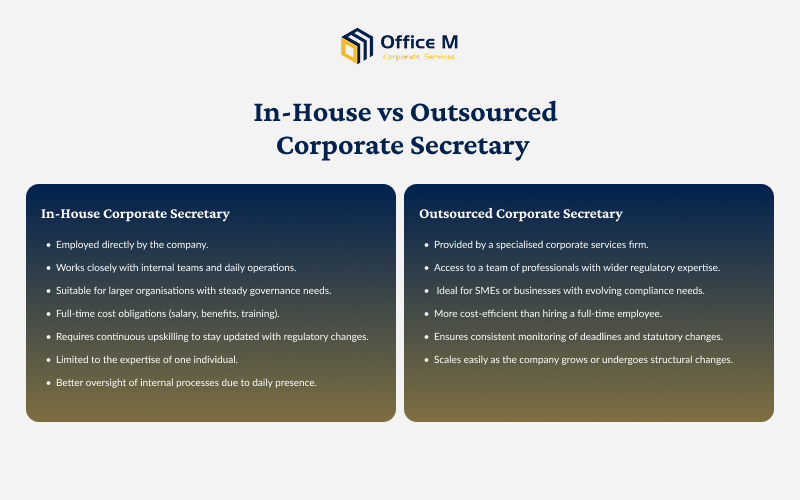
4. What is the difference between appointing an in-house corporate secretary and engaging a corporate service provider?
An in-house corporate secretary is employed directly by the company and focuses solely on internal governance and compliance needs. An outsourced corporate service provider offers access to a team of specialists who manage secretarial functions on the company’s behalf.
Many SMEs prefer outsourced support because it provides professional expertise, consistent compliance monitoring, and cost efficiency without the need for a full-time hire. This can be especially helpful for growing businesses with evolving governance and regulatory needs.

Conclusion
A corporate secretary plays a central role in keeping a company compliant, organised, and well-governed. Beyond handling routine paperwork, they help ensure that statutory obligations are met, records remain accurate, and key decisions are documented in ways that satisfy regulatory standards. With this foundation in place, directors and shareholders can focus on running the business, knowing that core governance processes are being managed with care.
The duties and responsibilities of a corporate secretary become even more important as a business grows. Expansion often brings new structures, additional stakeholders, and more complex reporting needs. A capable secretary helps the organisation navigate these changes smoothly by reducing compliance risks, preparing proper documentation, and keeping the company aligned with Singapore’s regulatory expectations. For many SMEs, this steady support offers reassurance, especially when internal resources are limited.
When these corporate secretary duties and responsibilities are carried out consistently, the company benefits from more transparent governance, organised records, and a smoother compliance journey as it grows.
Office M provides corporate secretarial, compliance, and governance services tailored to the needs of Singapore businesses at different stages of growth. Our team helps companies meet statutory requirements, maintain clear records, and build governance practices that strengthen over time.
If you are looking to enhance your compliance framework or streamline governance processes, reach out to Office M to learn how our services can help your company advance with confidence.
